Two schools, one wardrobe
"Classic" and "contemporary" are not fixed rulebooks. They are tendencies — ways of resolving the same questions about rise, leg shape, length and pairing. Men's classic formal trousers lean towards comfort, drape and continuity with traditional tailoring. Contemporary formal trousers lean towards a closer line, a shorter hem and a cleaner, more minimal finish.
Neither is more correct. Each suits different builds, workplaces and personalities, and most good wardrobes contain pieces from both. Understanding the difference simply helps you choose deliberately rather than by habit. For a fuller exploration of each, visit The Classic Form and Contemporary Trousers.
The classic approach
Shape
Classic styling favours a mid-to-high rise that sits near the natural waist, often with one or two front pleats. The leg is straight or gently tapered, with enough room through the thigh for the cloth to hang rather than cling. The overall effect is calm and unhurried.
Length
A slight to medium break is typical, with the hem resting on the shoe. Turn-ups (cuffs) are a traditional option on pleated trousers and add a little weight at the hem that helps the leg hang straight.
Finishing and pairing
- Side adjusters or a slim leather belt.
- Crisp, pressed centre creases.
- Oxfords, derbies or monk straps in polished leather.
- Shirts tucked in fully, often under a blazer or a knitted layer.
- Mid-weight cloths with good drape, in navy, grey and brown.
Classic dressing asks the cloth to drape. Contemporary dressing asks the line to be clean.
The contemporary approach
Shape
Contemporary styling usually means a mid rise, a flat front and a slim or tapered leg. The trouser follows the body more closely, though a well-cut contemporary pair still leaves room to move. More recently, relaxed contemporary cuts with a higher rise and fuller leg have also appeared — proof that "contemporary" describes an attitude to editing, not only slimness.
Length
No break or a very slight break is common, with the hem just meeting the top of the shoe. Some cropped styles stop just above the ankle bone, which suits loafers and relaxed settings rather than conservative offices.
Finishing and pairing
- Clean waistbands, sometimes with an extended tab and hidden closures.
- Fabrics with a little stretch for comfort in a closer fit.
- Loafers, sleek derbies, chelsea boots or minimal leather sneakers in relaxed workplaces.
- Shirts in finer fabrics, knit polos or fine-gauge sweaters instead of a jacket on some days.
- A wider colour range, including taupe, olive, stone and textured greys.
The role of fabric
Fabric often decides whether a cut reads classic or contemporary more than the pattern itself. A fuller trouser in a fluid, drapey cloth looks traditional and relaxed; the same shape in a crisp, dry cloth can look strikingly modern. Equally, a slim trouser in a softly brushed or textured fabric feels warmer and more classic than one in a smooth, slightly stretchy weave. When a trouser feels "not quite right" for its intended style, the cloth is often worth checking before the cut. The Fabric Observatory explores these qualities in more detail.
Side by side
Comparing the same decisions makes the difference clearer:
- Rise — classic: mid to high, near the natural waist. Contemporary: usually mid.
- Front — classic: often pleated. Contemporary: usually flat.
- Leg — classic: straight with gentle taper. Contemporary: slim and tapered, or deliberately relaxed.
- Break — classic: slight to medium. Contemporary: none to slight.
- Waist — classic: side adjusters or a belt. Contemporary: belt, tab or clean waistband.
- Shoes — classic: lace-ups in polished leather. Contemporary: loafers, sleek lace-ups, boots.
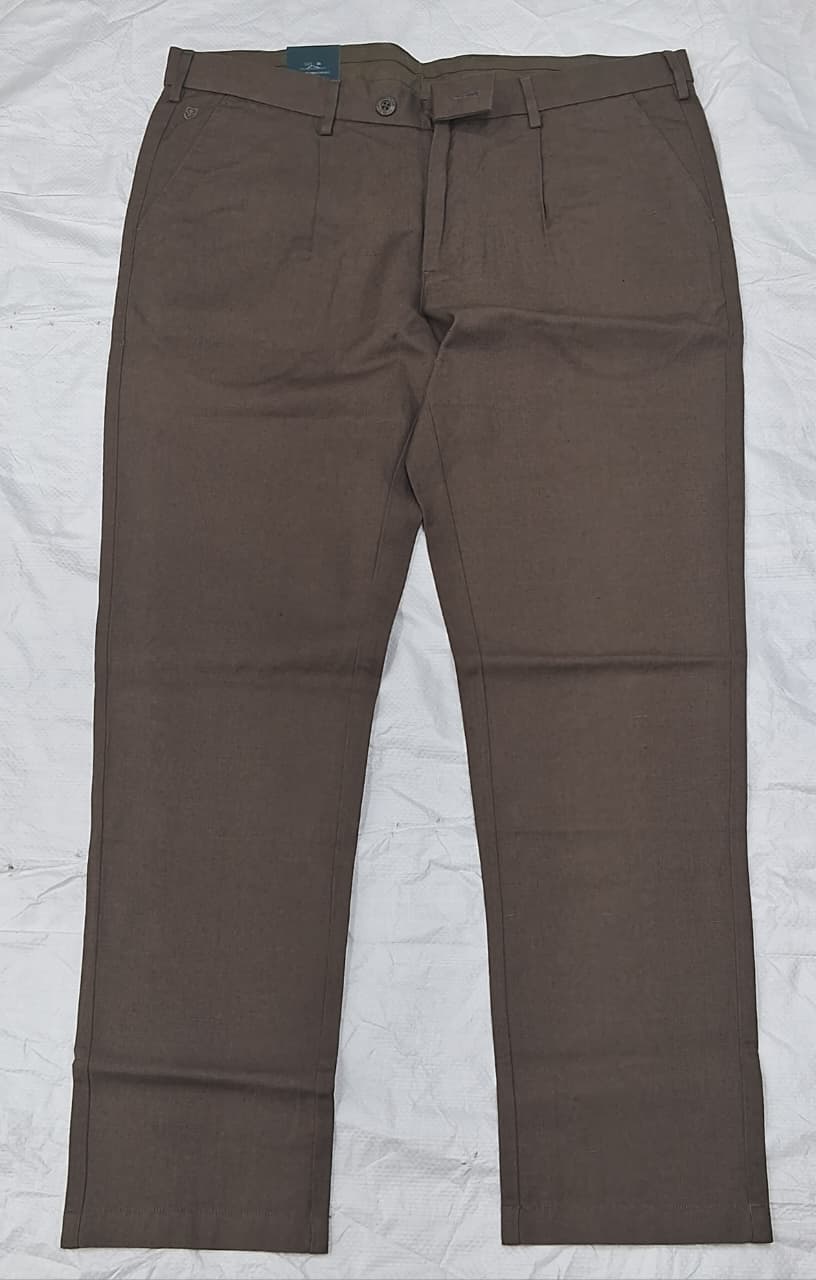
The trouser in the plate above sits between the two: single pleats and an extended button tab borrowed from classic tailoring, on a straight, uncluttered leg that would work with a contemporary loafer.
If you are unsure which direction a trouser leans, look at the front and the hem together. Pleats with a break read classic; a flat front with no break reads contemporary. Mixed signals — pleats with a cropped hem, for instance — are where a modern blend begins.
Blending the two
Some of the most effective formal wear for men today mixes the schools on purpose. A few reliable combinations:
- A single-pleat trouser with a slight break — the comfort of a pleat with a modern, shorter hem.
- A flat-front trouser at a mid-to-high rise — clean lines with the leg-lengthening effect of a higher waist.
- A classic navy or grey cloth in a tapered cut — traditional colour, contemporary shape.
- A contemporary slim trouser with polished oxfords — modern silhouette, classic formality for important meetings.
The key is to change one or two variables at a time. Shifting every element at once — rise, leg, length, fabric and shoes — tends to produce an outfit that feels like a costume rather than a personal style. Pleat choice is covered in Pleated vs Flat-Front Formal Trousers, and rise in Understanding Trouser Rise and Proportion.
Which suits you?
Use these questions as a guide:
- Does your workplace favour tradition and senior-client meetings? Lean classic.
- Is your office relaxed or creative? Contemporary pieces will feel at home.
- Do you value comfort in long seated hours? A higher rise and a pleat help.
- Is your build slim and your preference for a sharp line? Flat front and taper suit you.
- Do you own mostly lace-ups? Classic lengths will pair more easily.
- Do you wear loafers often? Shorter, contemporary hems show them best.
Whichever way you lean, fit remains the foundation — a well-fitted classic trouser and a well-fitted contemporary one will both look better than a poorly fitted version of either. Explore Fits & Silhouettes to compare cuts, or contact Options Mall to talk through which direction suits your wardrobe.