The Form LabA Study in Modern Formal Trousers

Room 02  /  Proportion study

Fits & Silhouettes: The Geometry of Fit

A formal trouser is a set of lines: waist, seat, thigh, knee and hem. Change one line and the whole silhouette changes. This is a formal trouser fit guide drawn the way a pattern cutter thinks.

  1. 01Slim
  2. 02Regular
  3. 03Straight
  4. 04Tapered
  5. 05Classic
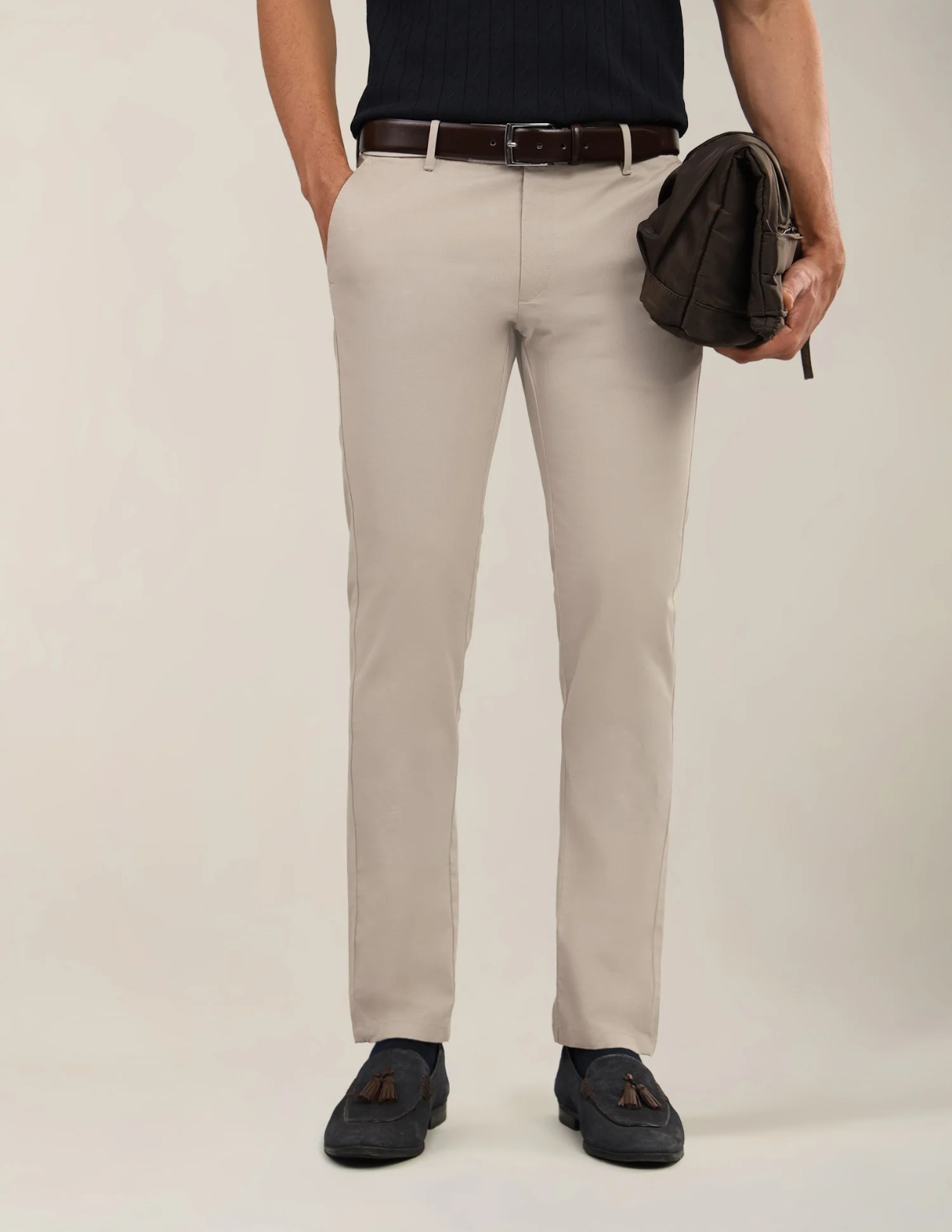
Man standing in stone-coloured slim formal trousers with a dark belt and suede loafers, showing a clean line from waist to hem Waist Seat Knee Hem
Fig. 00Four reference lines: every fit is a different relationship between them.

Plate I · Five silhouettes, one scale

Same waist.
Five different legs.

Fit is not the same as size. Two trousers with the same waist measurement can feel and look completely different because of what happens below it: how much room the seat and thigh are given, where the leg starts to narrow, and how wide the hem finishes.

The drawing below holds the waist constant and changes only those lines. Read it left to right, from the closest cut to the most generous.

Five trouser silhouettes drawn side by side at the same waist: slim, regular, straight, tapered and classic, from narrowest to fullest leg 01 02 03 04 05
  1. 01 Slim
  2. 02 Regular
  3. 03 Straight
  4. 04 Tapered
  5. 05 Classic

Dashed lines mark waist, hip, knee and hem. Drawings are illustrative proportions, not a size chart.

Fit 01 of 05

Slim Fit

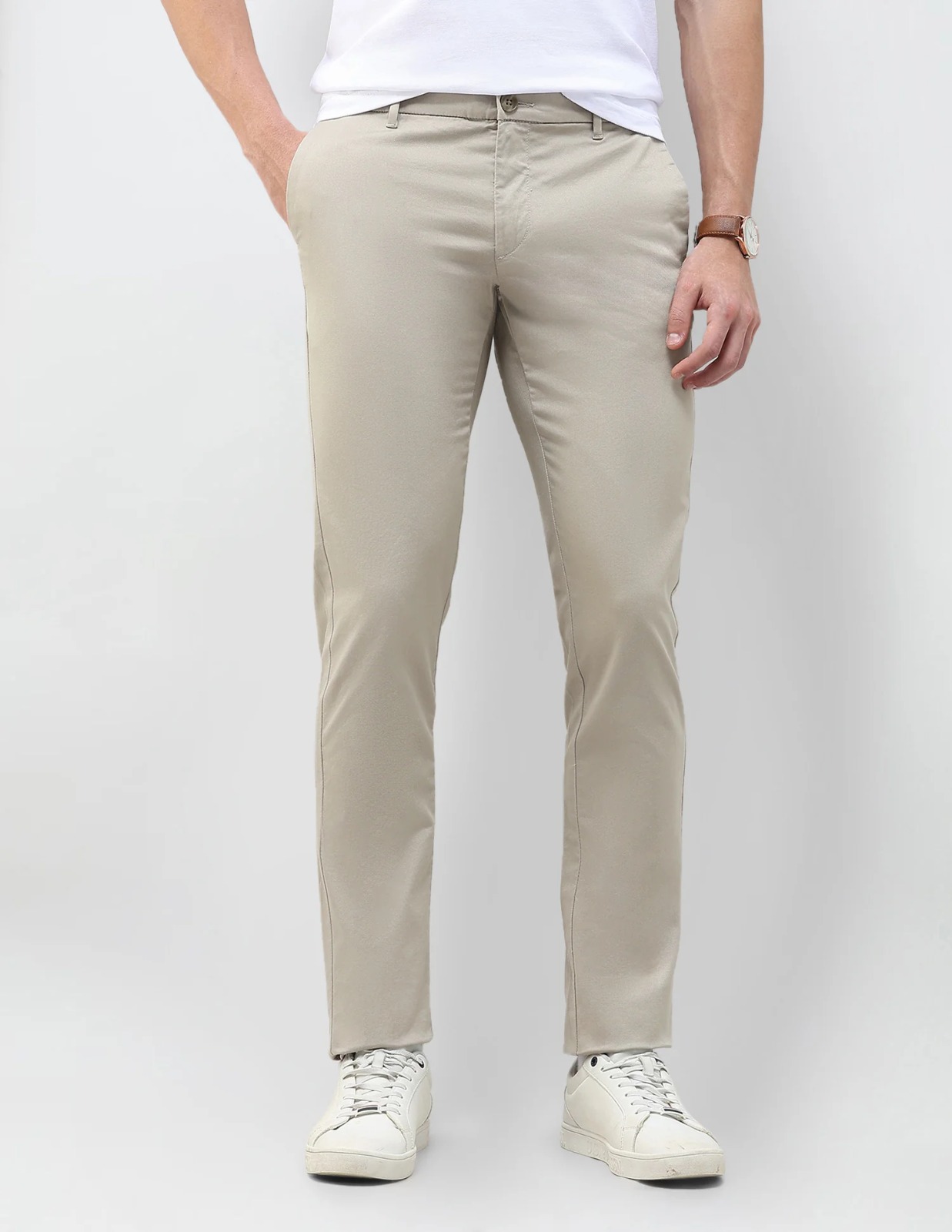
Man wearing beige slim fit trousers with a white T-shirt and white sneakers, the leg narrowing to a small opening at the ankle
Fig. 01Close through the thigh, narrow at the ankle.
Slim · thigh / knee / hem

Silhouette

Cut close to the body through the seat and thigh, then narrowing gradually to a smaller leg opening. The line follows the leg without gripping it: on a good slim fit you can still see the trouser hang, rather than the shape of the leg underneath.

Styling character

Sharp, contemporary and clean. Slim fit formal trousers sit well with fitted shirts, shorter jackets, loafers and minimal leather sneakers, and they look best finished with no break or a slight break so the shoe stays visible.

Considerations when choosing

  • Front pockets that flare open, or horizontal creases fanning out from the crotch, mean the cut is too tight for you.
  • Sit down before deciding. A slim trouser that is comfortable standing can strain across the seat and knee when seated.
  • Stretch in the fabric adds comfort, but it should not be what holds the fit together.
  • Muscular thighs or a fuller seat often suit a tapered cut better: room at the top, the same neat ankle.

Relative room (illustrative)

Seat
Thigh
Knee
Hem

Fit 02 of 05

Regular Fit

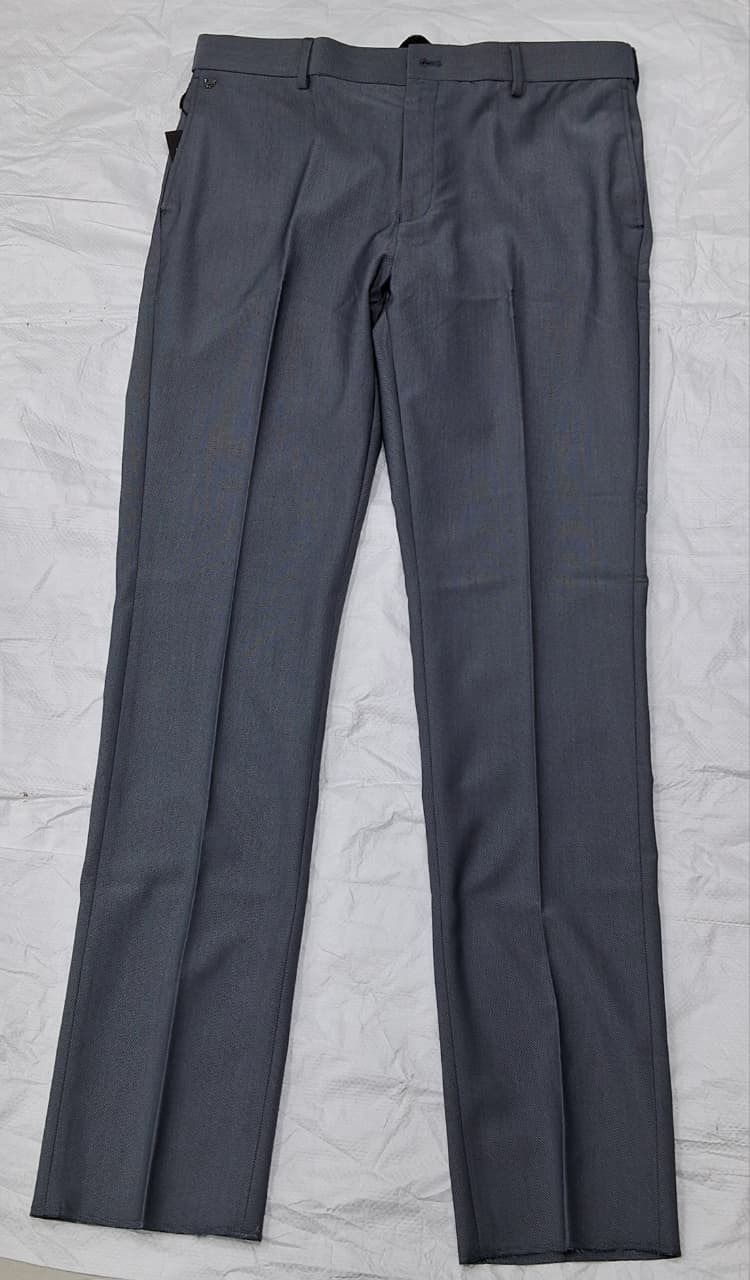
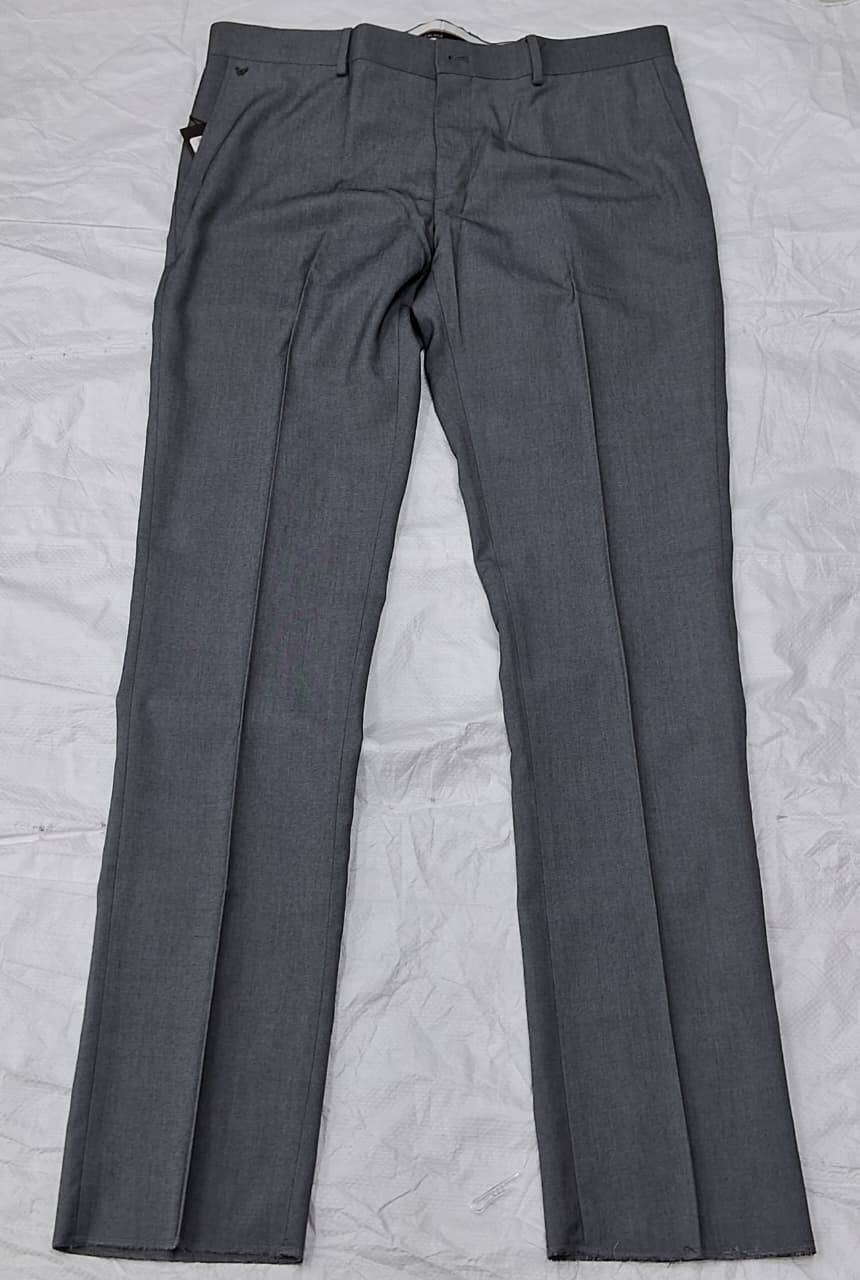
Navy grey regular fit formal trousers laid flat, with moderate room through the thigh and a medium leg opening
Fig. 02Moderate room, mostly straight fall.
Regular · thigh / knee / hem

Silhouette

Moderate room through the seat and thigh, with the leg falling in a mostly straight line and narrowing only gently to a medium leg opening. It skims the body rather than following it.

Styling character

The dependable middle ground and the most common cut for business formal trousers. Regular fit formal trousers read professional rather than fashionable, suit long working days and work with the widest range of builds, shirts and formal shoes.

Considerations when choosing

  • Regular should not mean baggy. Loose folds under the seat or at the back of the thigh suggest the trouser is simply too big.
  • A slight to half break suits the medium hem; it sits neatly over Derbies, Oxfords and brogues.
  • If you are between a slim and a regular, the regular with a little tapering by an alteration tailor is often the more comfortable choice.

Relative room (illustrative)

Seat
Thigh
Knee
Hem

Fit 03 of 05

Straight Fit

Charcoal straight fit formal trousers for men laid flat, the leg keeping the same width from knee to hem with a sharp crease
Fig. 03Knee and hem the same width.
Straight · thigh / knee / hem

Silhouette

The leg keeps almost the same width from the knee to the hem, so the line falls vertically. "Straight" describes the leg rather than the top: the seat and thigh can be slim or regular depending on the cut.

Styling character

Clean, architectural and balanced. A straight leg sits properly over formal shoes, and the uninterrupted vertical line, especially with a pressed crease, makes the legs read longer. It suits men's classic formal trousers and modern office trousers alike.

Considerations when choosing

  • Works well for taller frames and for fuller calves, which a tapered leg can catch on.
  • On very slim legs, a wide straight hem can look heavy; a slim-straight cut solves this.
  • Match the hem width to your shoes. Too narrow and a large shoe looks oversized; too wide and the fabric pools.

Relative room (illustrative)

Seat
Thigh
Knee
Hem

Fit 04 of 05

Tapered Fit

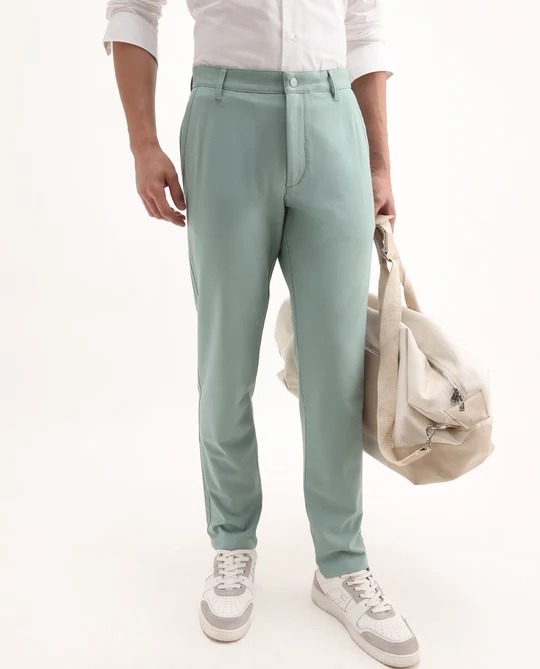
Man in mint green tapered trousers and a white shirt carrying a bag, the trouser roomy at the thigh and narrow at the ankle
Fig. 04Room above the knee, narrow below it.
Tapered · thigh / knee / hem

Silhouette

Comfortable room at the seat and thigh, then a noticeable narrowing from the knee down to a small leg opening. The result is a gentle wedge: generous at the top, neat at the ankle.

Styling character

Modern and relaxed. Tapered trousers are common in contemporary office wear and in pleated styles, and pair naturally with loafers, monk straps and clean sneakers. A slightly shorter length shows off the shape.

Considerations when choosing

  • A good option for athletic builds: room for the thigh without losing a sharp finish.
  • Check that the taper doesn't catch on the calf when you sit or climb stairs.
  • Finish with no break or a slight break; a narrow hem cannot fold neatly into a deeper break.
  • Very chunky shoes can look oversized under a sharp taper.

Relative room (illustrative)

Seat
Thigh
Knee
Hem

Fit 05 of 05

Classic Fit

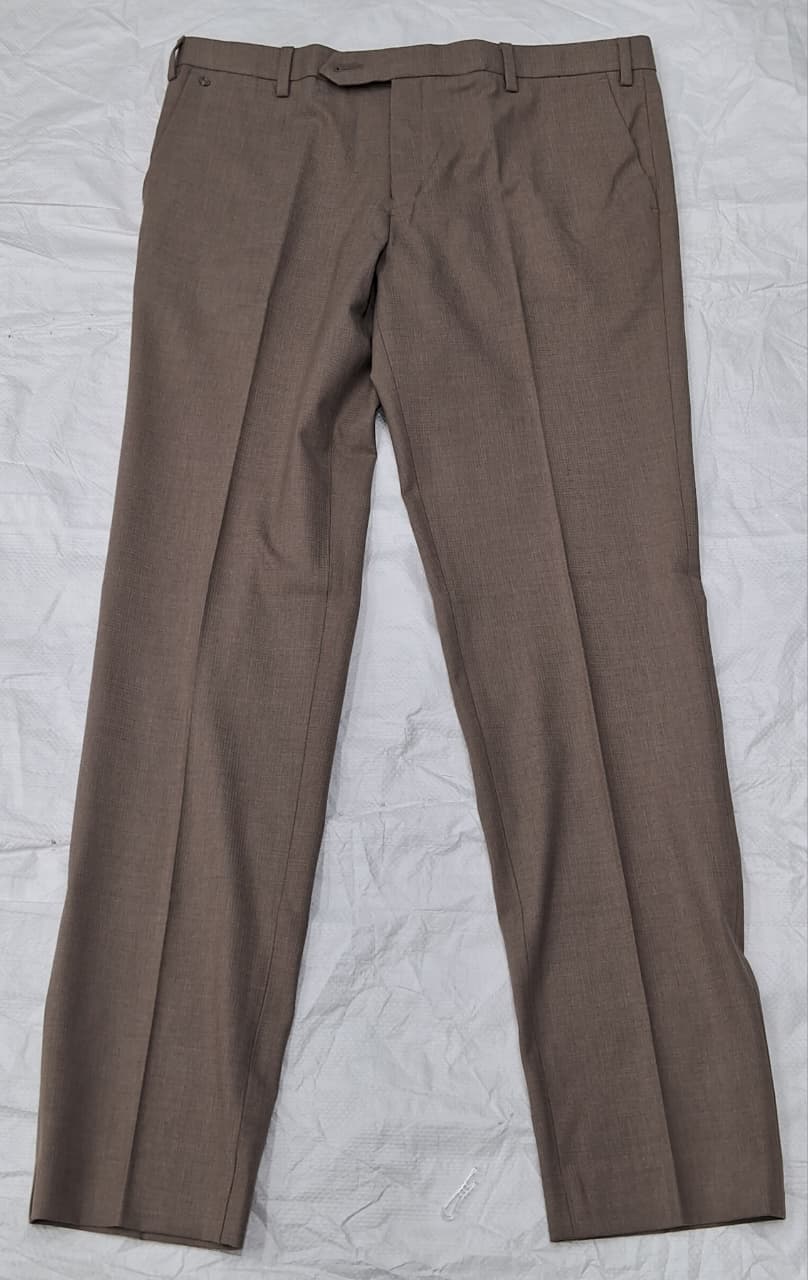
Taupe brown classic fit formal trousers laid flat, with a fuller leg falling straight to a wider hem
Fig. 05The fullest line, made to drape.
Classic · thigh / knee / hem

Silhouette

The most generous of the five: usually a higher rise, a fuller seat and thigh, and a wide leg that falls straight to a larger opening. Pleats are common, adding room at the hip.

Styling character

Traditional, comfortable and composed. A classic fit drapes rather than clings, which suits structured jackets, formal suiting and ceremonial dressing, and it pairs with substantial shoes such as Oxfords and brogues.

Considerations when choosing

  • Comfortable for larger builds, taller frames and anyone who sits for long hours.
  • On a slim frame it can look oversized unless the waist and seat are well tailored.
  • Finish the hem precisely, with a half break or turn-ups, so extra width doesn't pool over the shoe.

Relative room (illustrative)

Seat
Thigh
Knee
Hem

A

Waist positioning

Formal trousers are designed to sit at a particular height: at the natural waist (roughly level with the navel, the narrowest part of the torso), or a little lower, around the top of the hips. The trouser should sit where it was cut to sit. Pushing it up or letting it slide down changes the rise, the length and the way the legs hang.

The waistband should run level all the way round, without dipping at the back or digging in at the front. You should be able to slide a finger or two inside comfortably, and the trouser should stay in place without a belt; the belt is a finishing detail, not a support.
B

High-rise, mid-rise and low-rise

The rise is the distance from the crotch seam to the top of the waistband. It decides where the trouser sits and how long your legs look.

High rise · at or above the navel

Sits at the natural waist. It keeps a shirt tucked, lengthens the line of the leg and avoids a gap of shirt showing between the jacket button and the waistband. Typical of classic tailoring and pleated trousers, and helpful for men with shorter legs relative to the torso.

Mid rise · just below the navel

The most common rise in contemporary formal trousers. It balances comfort and proportion, works with both slim and regular fits, and suits most builds and most dress codes.

Low rise · on the hips

Rare in formal wear. Sitting on the hips, it tends to shorten the look of the legs, lets shirts work loose, and can leave a triangle of shirt visible below a buttoned jacket. Better kept for casual trousers.

More in the journal: Trouser rise and proportion

C

Seat & thigh comfort

The seat should follow the curve of the body: no horizontal pulling across the back, and no loose vertical folds sagging beneath it. Front pockets should lie flat and closed. At the thigh, you should be able to pinch a little spare fabric when standing, and sit without the cloth pulling tight.

D

Leg opening

The leg opening is where the shape of the leg arrives at the ankle: how sharply it narrows from the knee, and how it relates to the calf and the shoe. A narrow opening looks sleek with loafers and minimal shoes; a wider one balances heavier formal shoes and longer feet.

F

Hem width

The finished width at the bottom of the trouser. Proportion matters more than numbers: the hem should cover a good part of the shoe from the front without swallowing it. Hem width also decides the break; wider hems fold more, narrow hems barely fold at all. The finish counts too: a plain hem, a slight slant (a touch longer at the back), or turn-ups, which add weight and suit fuller, classic legs.

E

Trouser length

Length depends on where the waist sits, so check it with the trouser at its proper height and with the shoes you will actually wear. A common reference point for formal trousers: the front of the hem meets the top of the shoe, and the back falls towards the top of the heel.

Some sock will show when you sit; that is normal. If plenty of sock shows when you are standing, the trouser is short. If the fabric stacks in several folds, it is long.

G

Trouser break

The break is the fold that forms where the front of the trouser meets the shoe. It is a style choice as much as a measurement.

No break

The hem just touches the top of the shoe and the leg falls without a fold. Clean and contemporary; best with slim and tapered fits and with loafers or sleek shoes.

Slight break

The hem rests lightly on the shoe, creating a small dimple at the front. The most versatile choice: modern enough for slim cuts, correct enough for business formal dress.

Half break

One clear fold at the front, with the hem covering more of the shoe. A traditional business standard that suits regular, straight and classic fits.

Full break

A deep fold, with the hem covering much of the shoe and reaching low at the back. Traditional and generous; it needs a wider leg, and on slim trousers it simply looks too long.

More in the journal: Trouser length and break

H

Front crease

The pressed line running down the centre of each leg is one of the clearest signals of a formal trouser. It draws the eye vertically, making the leg look longer and the trouser sharper.

A well-placed crease runs from the waistband (often continuing from a pleat) over the centre of the knee to the middle of the shoe. A crease that drifts towards the inside or outside of the leg suggests the trouser has been pressed off-line, and it will make the leg look twisted.

I

Pleated vs flat-front

Flat-front. No folds at the waistband. Clean, modern and the natural partner for slim, straight and tapered fits. It shows less fabric across the front, so it relies on an accurate fit at the hip.
Pleated. Folds at the waistband release extra room through the hip and thigh, which helps when sitting. Forward pleats open towards the fly; reverse pleats open towards the pockets. Pleats should lie closed when you stand. If they pull open, the trouser is too tight at the hip.

More in the journal: Pleated vs flat-front trousers

Plate III · J · The fitting-room check

How to assess fit, point by point

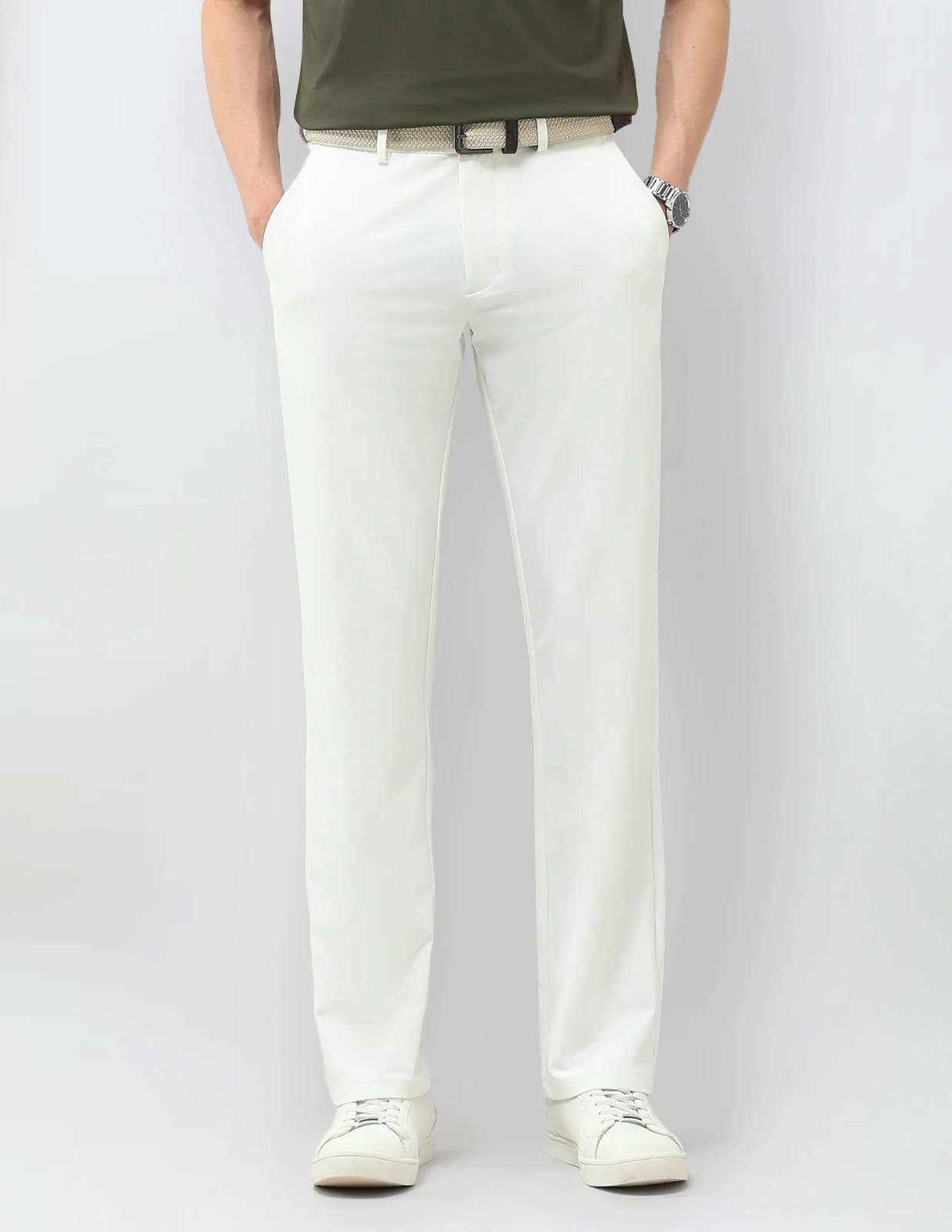
Seven checkpoints from waist to hem. Select a number to read what to look for, ideally in front of a full-length mirror, in the shoes you plan to wear.

Man standing in white formal trousers with an olive T-shirt and white sneakers, used to show the checkpoints of a well-fitted trouser
Fig. 06Seven checkpoints on a straight, mid-rise trouser.

01

Waistband

Level all the way round, sitting where the trouser was designed to sit. No gap at the back of the waist, no folding over at the front, and it stays in place without a belt.

02

Rise & fly

The fly lies flat without bulging or pulling. Horizontal creases fanning out from the crotch mean the rise or seat is too tight; a loose, hanging crotch means the rise is too long for you.

03

Seat & hip

Check from the side and back. The seat follows your shape without pulling across or sagging below, and the front pockets stay closed rather than flaring open at the hip.

04

Thigh

A small pinch of spare fabric when standing. No horizontal stress lines across the front of the thigh, and no excess fabric rippling when you move.

05

Crease & knee

The crease falls straight down over the centre of the knee. Bend your knee: the fabric should not grip, and it should fall back cleanly when you straighten.

06

Leg opening

The hem sits in proportion to your shoe: it covers the top of the shoe from the front without flapping or clinging to the ankle.

07

Length & break

The break you chose, the same on both legs. From the side, the back of the hem should sit near the top of the heel, and when you stand still very little sock should show.

Then move: four tests in motion

A trouser that only fits while you stand still does not fit. Before you decide, spend a minute moving in it.

The stride test

Walk a few long steps. The fabric should move with you without pulling across the thigh or knee, and the hem shouldn't ride far above the shoe with each stride. The crease should return to a straight line when you stop.

The sit test

Sit down as you would at a desk. The waistband shouldn't dig in, the seat seam shouldn't feel strained, and the pockets shouldn't gape. Some sock will show when seated; that's expected.

The stair test

Lift one knee high, as if climbing a step. You should have room at the knee and thigh, and the leg opening of a tapered trouser shouldn't catch on the calf.

The mirror test: side and back

Turn sideways: the crease runs straight and there are no diagonal drag lines from the seat to the knee. Turn around: the seat is smooth and the hem rests close to the top of the heel.

Further reading · The journal

Go deeper into fit

Five journal articles that pick up where this page leaves off. Useful whether you're comparing formal trousers in Thane or anywhere in the Mumbai region.

  1. J1How to choose the right formal trouser fit
  2. J2Slim fit vs regular fit trousers
  3. J3Trouser length and break
  4. J4Pleated vs flat-front trousers
  5. J5Trouser rise and proportion