The Form LabA Study in Modern Formal Trousers

Room 03 / The Classic Form

The Classic Form

The enduring language of formal dressing

Men's classic formal trousers have changed slowly, and for good reason. Each detail — the rise, the crease, the quiet colour — exists because it makes a man look composed and lets him move through a working day with ease.

This room traces how the formal trouser arrived at its classic form, what its proportions are measured against, and how its traditions still guide office wear for men today — from the boardroom to the daily commute across Mumbai and Thane.

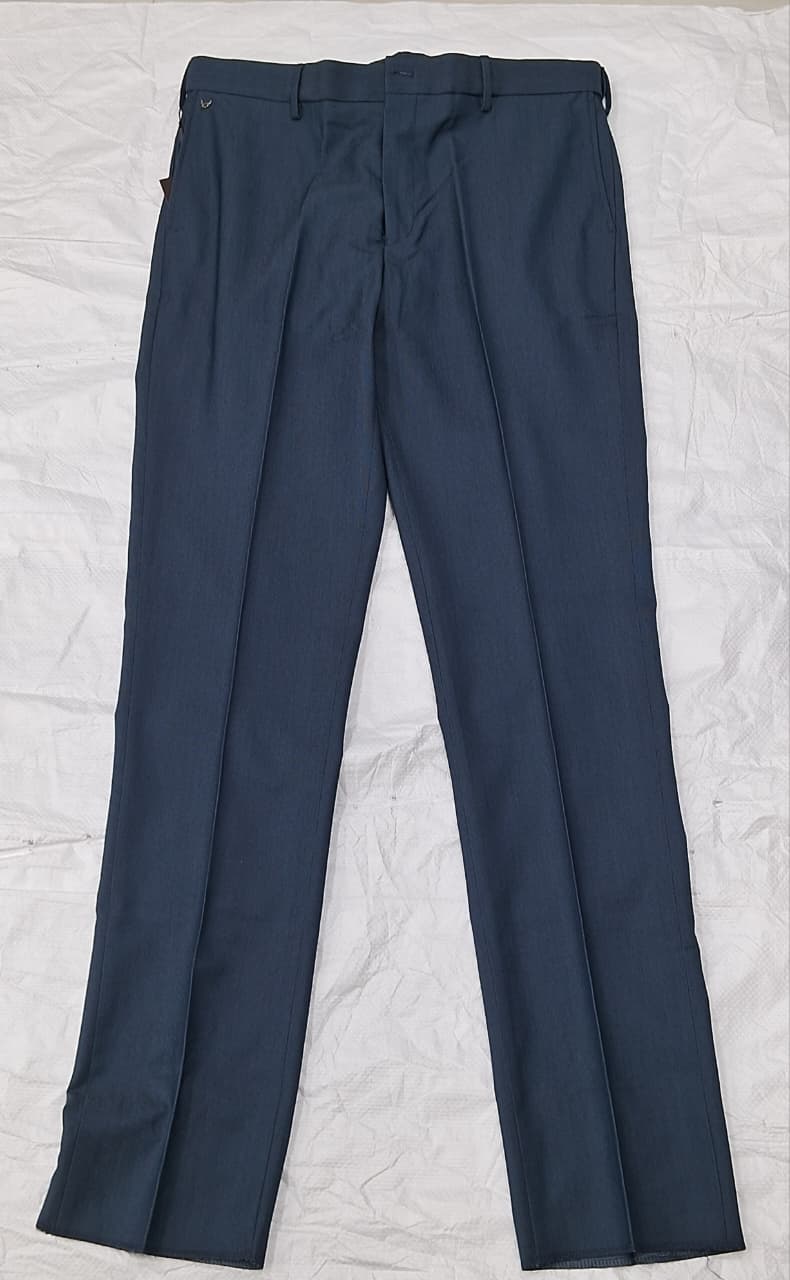
Petrol blue men's classic formal trousers laid flat, showing a straight leg, flat front and sharply pressed crease
Plate 01Petrol blue, flat front, pressed crease — the classic line in a single garment.

I / A short history

An evolution, measured in eras

Tailoring history is full of confident dates and colourful stories, many of them hard to verify. What follows is the broadly accepted outline — read it as a measuring rule laid against two centuries of men's formal wear, marked by era rather than by year.

  1. Early 19th century

    Trousers replace breeches

    Knee breeches and stockings gradually give way to full-length trousers as everyday menswear. What once seemed informal becomes the accepted dress of a gentleman — the starting point of the formal trouser as we know it.

  2. Later 19th century

    The lounge suit appears

    A looser, simpler coat and matching trousers emerge as relaxed alternatives to frock coats and morning dress. At first they are leisure clothes; their practicality is what makes them last.

  3. Turn of the 20th century

    The pressed crease settles in

    The sharp front crease — often said to have begun as a by-product of trousers stored folded — becomes a deliberate mark of care. Pressed down the centre of each leg, it gradually turns into the defining signature of formal trousers.

  4. Mid-twentieth century

    Fuller cuts and pleats

    As the lounge suit becomes standard business attire, trousers are typically cut with a higher rise, a fuller thigh and front pleats, worn with braces or a belt. Comfort through the seat and hip is part of the look.

  5. Late 20th – early 21st century

    The flat front returns

    Slimmer, flat-front trousers with a lower rise and a narrower leg gain popularity, alongside a broader shift towards separates: odd trousers worn with shirts rather than always with a matching jacket.

  6. Today

    A settled vocabulary

    Pleated and flat-front, straight and tapered now coexist. The classic form is less a single cut than a set of principles — a clean line, a pressed crease, quiet colour — that business formal trousers continue to share.

Read: classic vs contemporary trouser styling

II / Proportion

Classic trouser proportions

A classic formal trouser is judged less by any single measurement than by how its parts relate to each other — and to the man wearing it.

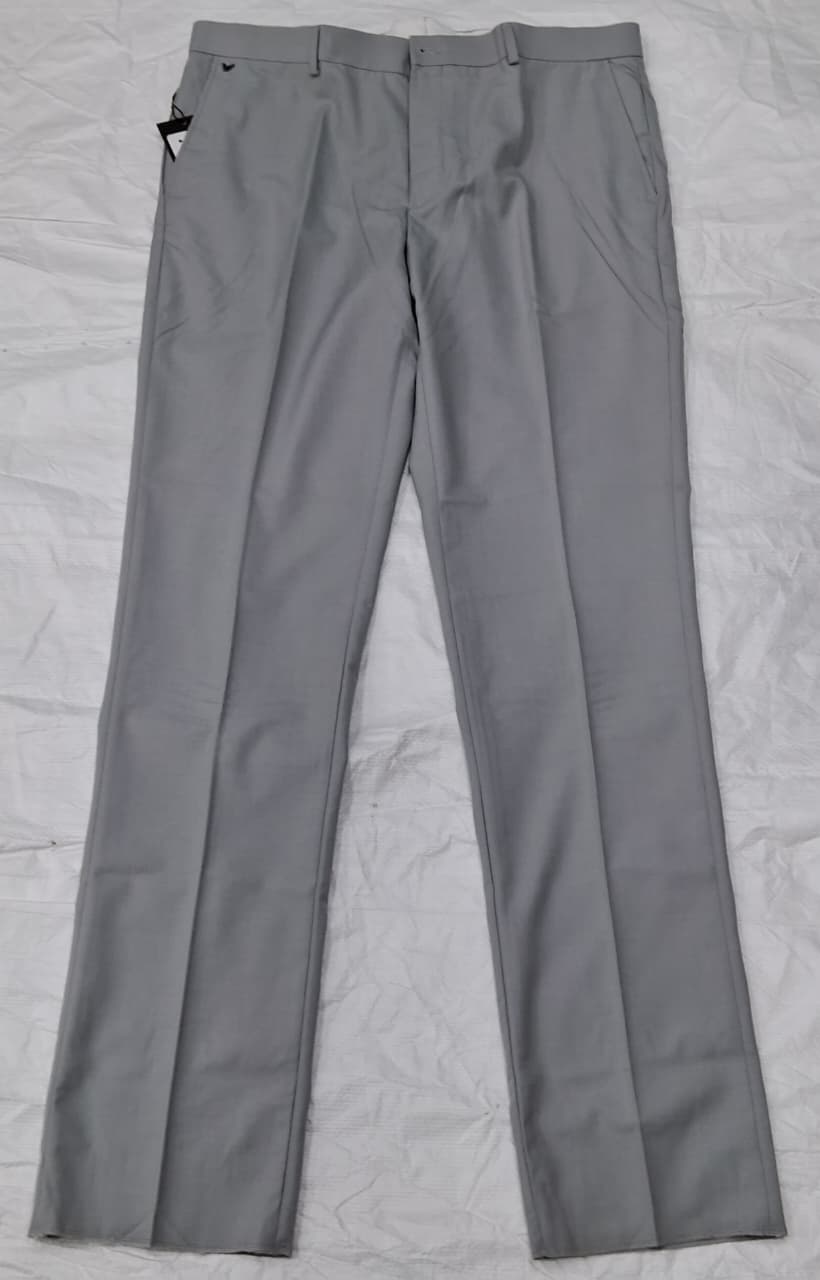
Light grey formal trousers for men laid flat, showing waistband, rise, a straight leg and a clean hem
Plate 02Light grey, annotated: four points that set a trouser's proportion.
  1. The waist

    Traditionally worn at or near the natural waist, so the trouser meets the shirt cleanly and the leg appears long. A waistband that sits too low shortens the body and invites the shirt to escape.

  2. The rise

    The distance from crotch to waistband. A mid-to-high rise is the classic choice: it keeps the front smooth when seated and balances the length of the jacket or shirt above. More on rise and proportion.

  3. The leg line

    A straight or gently tapering leg that falls from the seat without clinging at the thigh or flaring at the knee. The crease should run uninterrupted from waist to hem.

  4. The hem and break

    Classic tailoring favours a slight or medium break — a single soft fold where the trouser rests on the shoe. The hem is wide enough to sit over the shoe rather than above it. Trouser length and break, explained.

III / Front construction

Pleated and flat-front trousers

Diagram of a pleated trouser front with two folds beside the fly on each side

Traditional pleats

Pleats are folds of cloth stitched into the waistband beside the fly. They add room through the hip and thigh that opens when you sit or stride, then falls back into line when you stand.

  • Forward pleats open towards the fly; reverse pleats open towards the pockets. Both are long-established.
  • Single pleats read neater; double pleats give more room and a fuller drape.
  • Pleats need a sufficient rise to hang properly — on a low-rise trouser they tend to splay open.
  • They suit fuller frames, taller men and heavier, softer cloths that drape well.
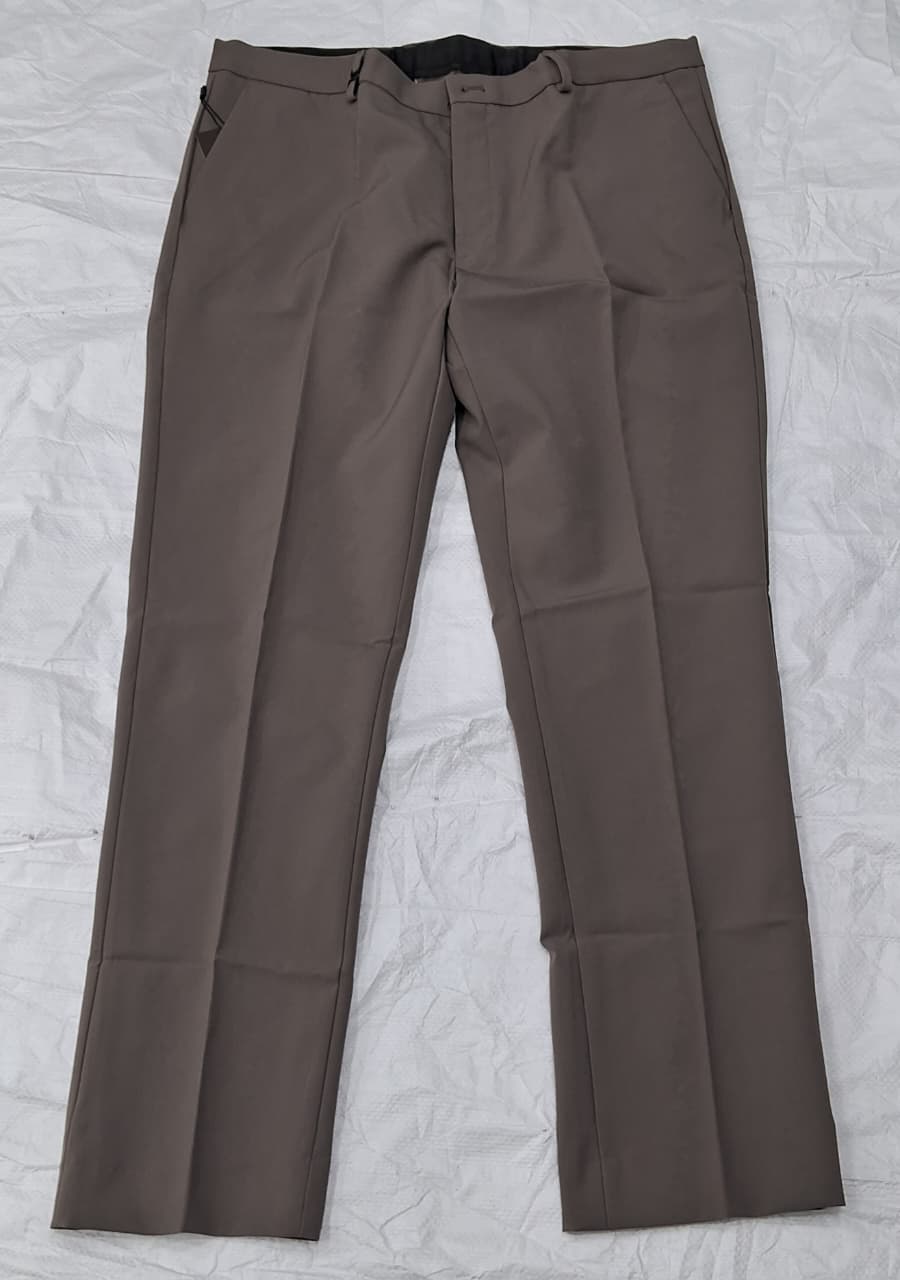
Diagram of a flat-front trouser with a smooth front and a single pressed crease line on each leg

Flat-front trousers

A flat front has no folds at the waist; shape comes from darts or careful cutting. The result is a cleaner, more streamlined front that pairs naturally with slim fit formal trousers and tucked-in shirts.

  • Reads crisp and modern while staying entirely within formal tradition.
  • Works best when the seat and thigh fit precisely — there is no spare cloth to forgive.
  • Suits slimmer frames and lighter, smoother suiting fabrics.
  • Every trouser photographed in this room is a flat-front cut.
Dark taupe flat-front formal trousers laid flat, with a smooth front, slanted pockets and a straight leg
Plate 03Dark taupe: a flat front with no pleats, shaped through the cut.

Pleated vs flat-front trousers — a fuller comparison

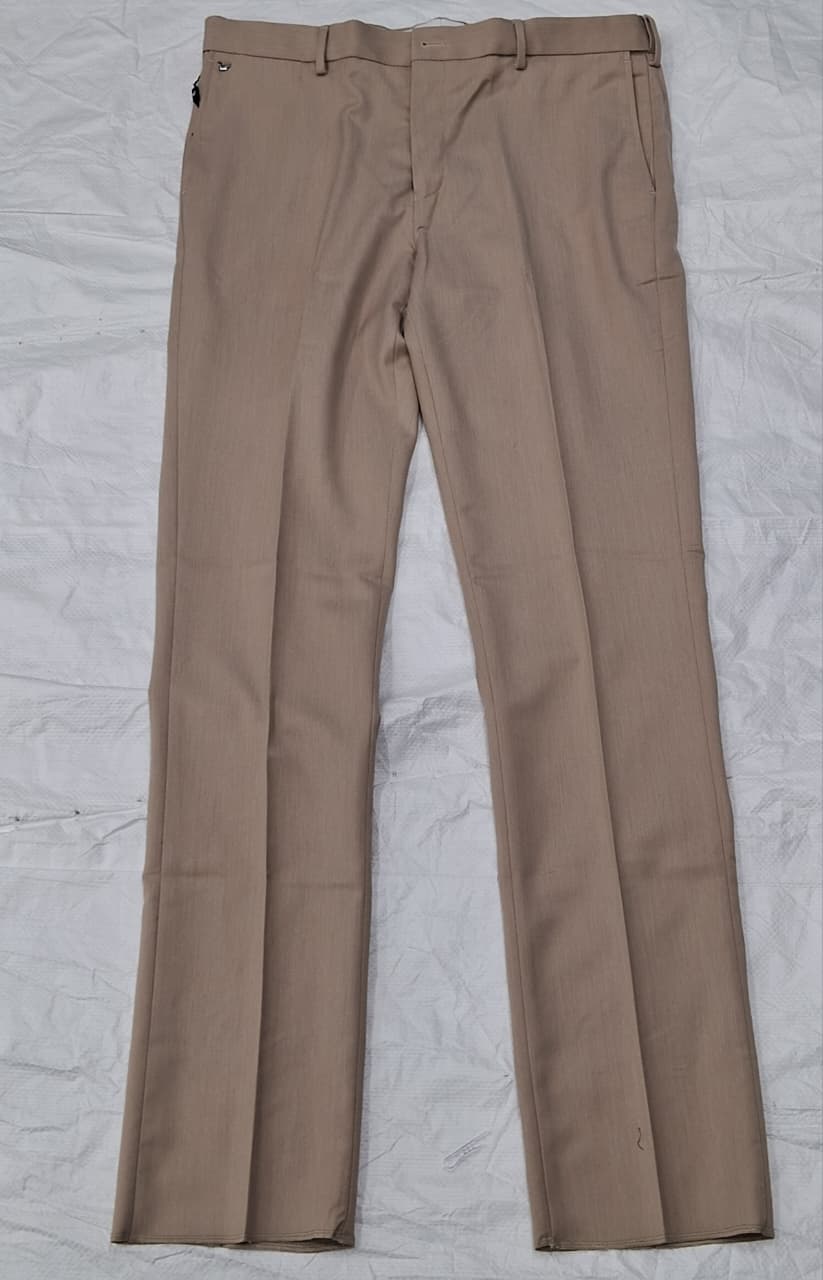
Tan formal trousers laid flat, with a pressed front crease running from waistband to hem on each leg
Plate 04Tan: the crease runs the full length of the leg, front and back.

IV / Traditional crease styling

One line, pressed

Nothing signals a formal trouser faster than its crease. A single sharp line down the front of each leg makes the leg look longer and straighter, and tells the eye the garment was cared for.

Where the crease should fall

On a well-pressed trouser the front crease starts just below the waistband — or from the pleat, on a pleated pair — and runs to the centre of the hem, landing over the middle of the shoe. The back crease follows the back of the leg to the heel.

Keeping it sharp

  • Hang trousers by the hem or folded along the crease over a bar, never bunched.
  • Press through a damp cloth to avoid shine, particularly on darker suiting.
  • Let a pair rest between wears; most cloths recover their line overnight.
  • Never press a new crease beside an old one — a "double line" is the giveaway of a hurried iron.

When to soften it

Linen, cotton and textured cloths take a softer crease, which suits warm weather and smart-casual settings. For business formal trousers in wool or wool blends, the crisp line is part of the uniform.

V / Neutral colour traditions

A palette that rarely shouts

Classic formal trousers live in a narrow, deliberate band of colour. Navy, charcoal and mid grey form the core; browns, tans and muted greens extend it. These tones flatter most skin tones, hide the wear of a working day and agree with almost any shirt. In a climate like Mumbai's, the lighter end of the range — stone, sage and light grey — earns its place for comfort as much as for style.

  • Navy
  • Charcoal
  • Mid grey
  • Brown
  • Tan
  • Sage grey
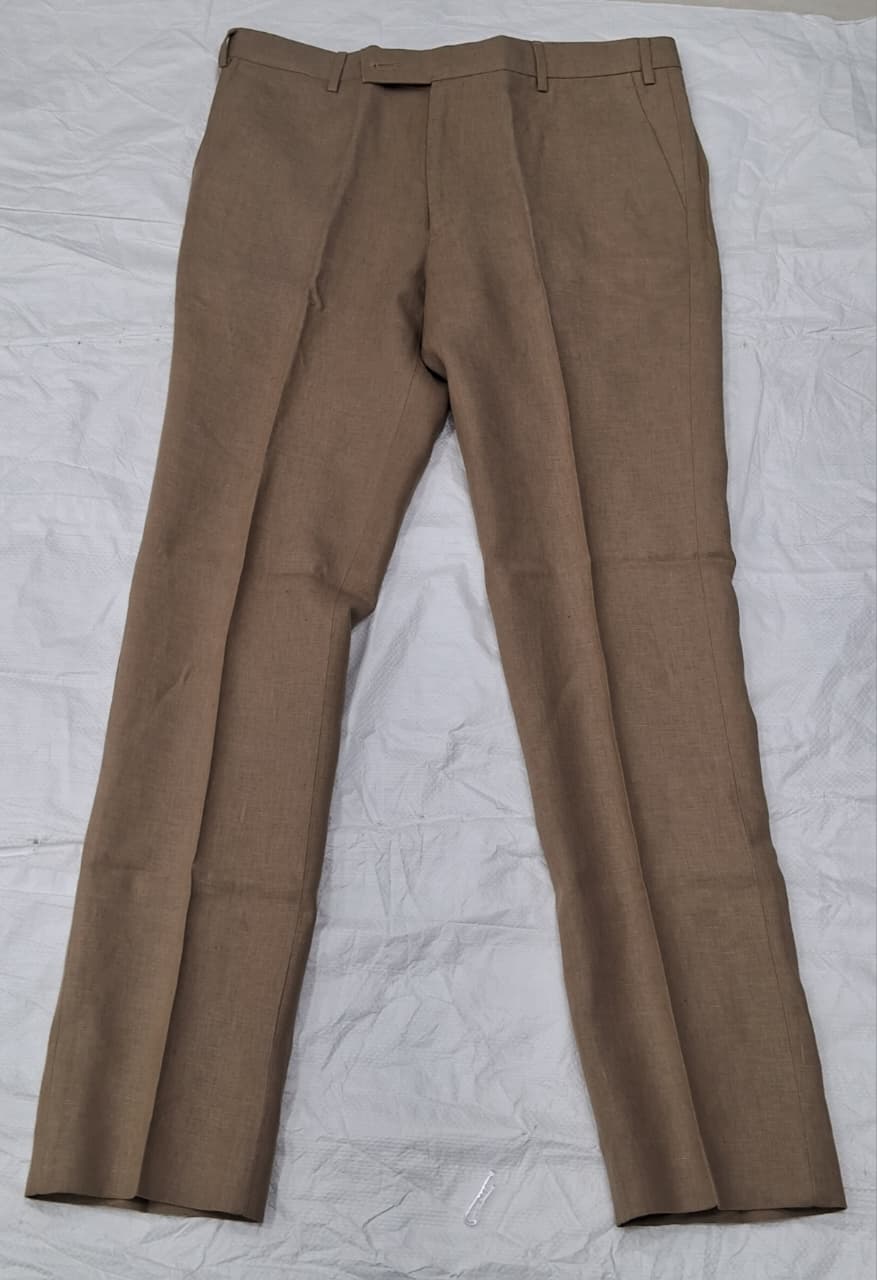
Brown classic formal trousers for men laid flat, in a softly textured cloth with a straight leg
Plate 05Brown — a warm neutral for cream, white and blue shirts.
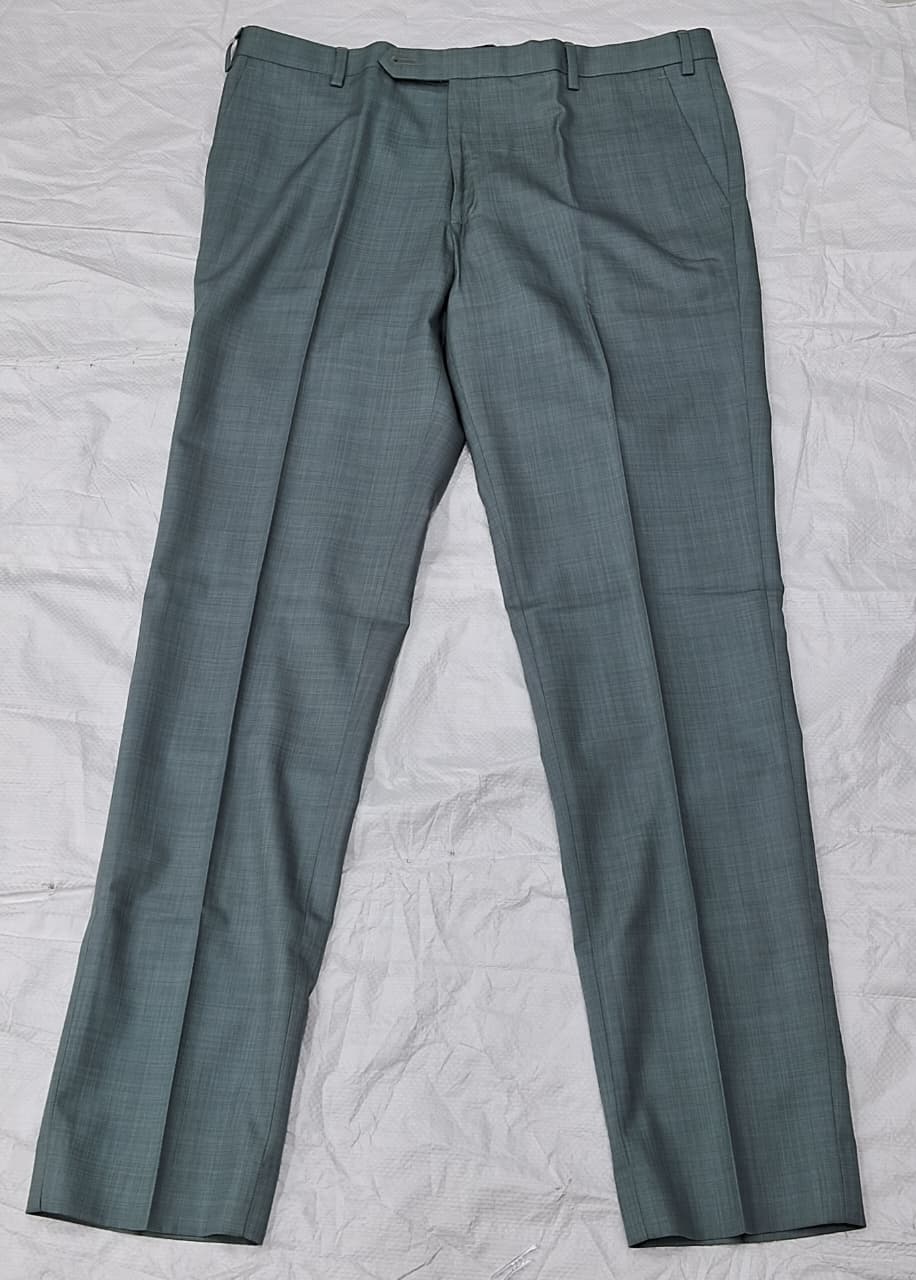
Grey-green formal trousers with a fine check pattern, laid flat to show the pressed crease and straight leg
Plate 06Fine check in grey-green — pattern kept quiet enough for the office.
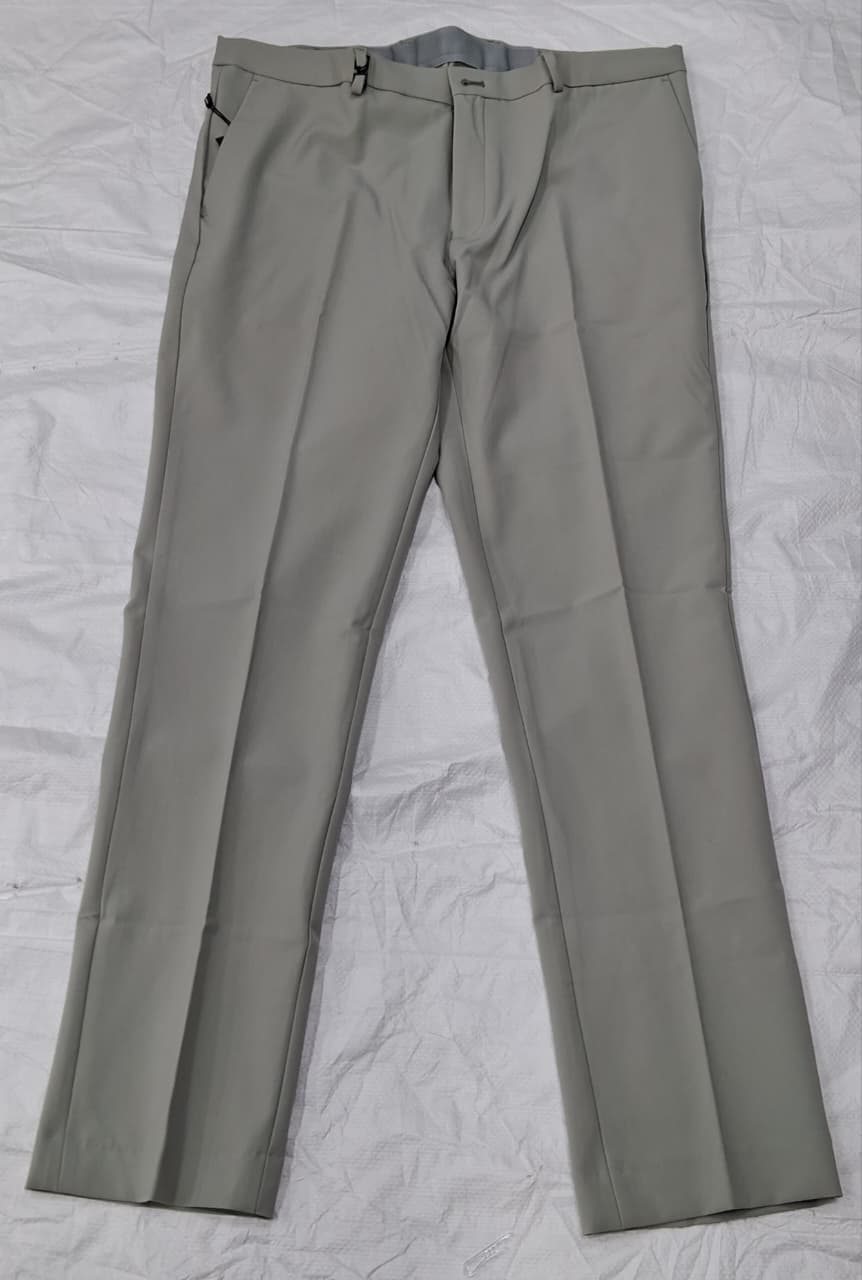
Pale sage-grey formal trousers laid flat, showing a smooth flat front and a clean, straight hem
Plate 07Pale sage-grey — the light end of the classic range.

Dark neutrals

Navy and charcoal are the most formal choices — the natural pair for interviews, presentations and board meetings, and the easiest base for a white or pale blue shirt.

Mid and light greys

Grey bridges almost every colour. Lighter greys look relaxed yet correct in daylight and warm weather; worn with navy or white they stay firmly business-like.

Earth tones

Brown, tan and sage bring warmth. They sit comfortably in everyday office wear and pair well with brown shoes, cream shirts and soft blues. Explore colour and composition.

VI / Classic office combinations

The register of combinations

A classic wardrobe works like a well-kept ledger: a few reliable entries that can be combined without thought. These pairings of formal trousers and shirts have stood the test of many working weeks.

Classic formal trouser and shirt combinations with suggested footwear and occasions
TrouserShirtShoes & beltBest for
NavyWhite or pale blue, plain or fine stripeBlack or dark brown Oxfords; matching beltInterviews, client meetings, daily office wear
CharcoalWhite, light pink or lavenderBlack Oxfords or Derbies; black beltPresentations, formal events, evenings
Mid greyLight blue, white or soft checkBlack or burgundy; either worksThe most versatile everyday pairing
BrownCream, white or light blueDark brown or tan leather; brown beltRelaxed offices, daytime meetings
Tan / stoneNavy, white or light blueBrown Derbies or loafersWarm weather, business casual Fridays
Sage / light greyWhite, navy or soft pinkBrown or suede in mid tonesDaylight events, summer office wear

Formal footwear coordination

The shoe completes the line the trouser begins. Classic rules are simple: the darker and plainer the trouser, the darker and sleeker the shoe; the belt follows the shoe in colour and finish.

Formal trousers and shoes, in depth
Oxfords — the most formal choice

Closed lacing and a sleek profile make Oxfords the natural partner for navy and charcoal business formal trousers. Black is the most formal; dark brown is a gentler alternative for daytime.

Derbies — formal but forgiving

Open lacing gives Derbies a slightly sturdier look. They suit mid-weight trousers in grey, brown and tan, and wider feet will often find them more comfortable over a long day.

Loafers — classic, but relaxed

A leather loafer sits at the relaxed edge of the classic wardrobe. Pair it with lighter trousers and a slight or no break, so the hem does not pool on a shoe without laces to hold it.

Socks and the break

Socks traditionally match the trouser rather than the shoe, extending the leg line when you sit. With a classic medium break, the hem should just touch the top of the shoe — enough to keep the crease falling straight.

Coda

Balance outlasts fashion

The classic form endures because it is built on proportion rather than novelty. A trouser that sits at the right height, falls in a clean line and meets the shoe gently will look right in any decade.

Silhouettes will keep moving — fuller, slimmer, fuller again — but the principles on this page continue to anchor men's formal wear. Learn them once, and every new trend becomes easier to read. For the other side of the story, step into the contemporary room next door.

Questions about classic formal trousers? Contact Options Mall in Vile Parle West, Mumbai.