What "slim" and "regular" actually mean
There is no universal standard behind these words. One brand's slim fit can be another's regular, so treat the label as a starting point rather than a promise. What the terms describe is the shape of the leg: how much room there is through the thigh, how sharply the leg narrows below the knee, and how wide the opening is at the hem.
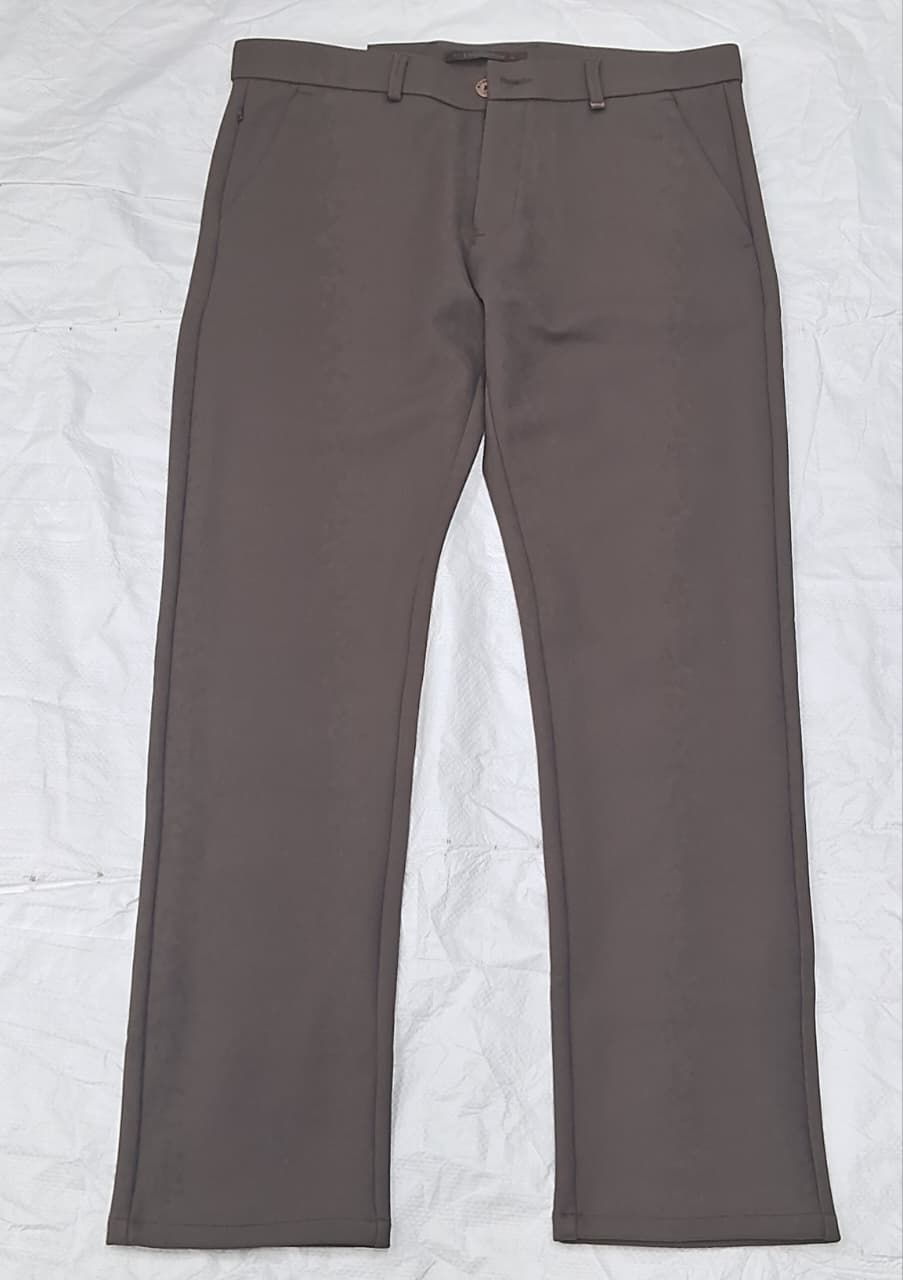
A useful way to think of it is as a line drawn from hip to ankle. In a regular fit, that line runs almost straight down. In a slim fit, it angles inward, following the leg more closely and ending in a narrower opening.
The slim fit
Slim fit formal trousers are cut closer to the body through the seat and thigh, then taper towards the ankle. The result is a cleaner, more contemporary outline with less loose fabric moving around the leg.
Strengths
- Creates a sharp, modern silhouette that pairs well with shorter jackets and fitted shirts.
- Shows off a neat hem and the shape of the shoe.
- Reduces excess cloth, which can make a lean frame look more defined.
Watch-outs
- If the cut is too narrow, fabric pulls across the thigh and the pockets flare open.
- A tight seat creates horizontal creases that look strained rather than tailored.
- Slim cuts in rigid, non-stretch cloth can feel restrictive through a long working day.
Slim should mean close, not tight. If you can see the outline of your pocket lining, the cut has gone too far.
The regular fit
Regular fit formal trousers give more room through the seat and thigh and keep a straighter leg down to a wider opening. This is the shape most people associate with classic men's office trousers and suit trousers.
Strengths
- Comfortable for long hours of sitting, commuting and moving between meetings.
- Drapes well — the fabric falls from the seat in a clean vertical line, which suits a pressed crease.
- Balances broader shoulders and fuller builds, keeping the overall figure in proportion.
Watch-outs
- Too much width and the trousers can look dated or oversized, especially on slender frames.
- A wide hem combined with a long length creates heavy folds over the shoe.
Between slim and regular sits a large middle ground often called tailored, straight or modern fit. If neither extreme feels right, a straight leg with modest room through the thigh is frequently the most versatile choice.
Slim and regular, side by side
Comparing the two cut by cut makes the differences easier to see:
- Seat: slim follows the body closely; regular allows a little ease.
- Thigh: slim leaves minimal spare cloth; regular gives room to move.
- Below the knee: slim tapers noticeably; regular stays close to straight.
- Hem opening: slim is narrower and suits sleeker shoes; regular is wider and suits more substantial shoes.
- Overall impression: slim reads contemporary and sharp; regular reads classic and relaxed.
You can see how these shapes translate into complete silhouettes in the Fits & Silhouettes room, and how classic and modern cuts sit within a wider wardrobe on Contemporary Trousers.
Which fit suits your body?
Body shape is a better guide than fashion. A few general patterns:
- Lean and of average height: slim fit usually looks most natural; a regular fit may seem roomy.
- Muscular legs: a regular or "athletic" cut with a fuller thigh and a gentle taper avoids strain lines.
- Fuller midsection: regular fit keeps the leg in balance with the upper body; very slim legs can make the torso look larger.
- Tall and slim: either works, though a slightly fuller straight leg can stop the figure looking overly narrow.
If you are still learning to read your own fit, start with our guide on how to choose the right formal trouser fit, which covers each checkpoint from waistband to hem.
Occasion, workplace and climate
Office and business settings
In conservative workplaces, regular or straight-leg trousers tend to look the most appropriate, especially with a suit jacket. In creative or relaxed offices, slim fit formal trousers with a crisp shirt and loafers can look polished without feeling stiff.
Evenings and events
Slim cuts often suit evening dressing, where a clean line under a shorter jacket looks deliberate. For long ceremonies or functions with plenty of sitting, a regular fit is simply more comfortable.
Warm and humid weather
In a climate like Mumbai's, airflow matters. A regular fit leaves space between cloth and skin, which can feel cooler through humid months. If you prefer a slim line, look for breathable, lightweight fabrics so the closer cut does not become uncomfortable.
How to decide in practice
- Try both cuts in the same size and fabric, so the comparison is fair.
- Sit, crouch and walk in each before forming an opinion.
- Check the thigh: slim should still allow a small pinch of fabric.
- Look at the hem with your usual work shoes on.
- View yourself in a full-length mirror from the side and back, not only the front.
- Choose the pair you forget you are wearing after five minutes.
Many men end up owning both: a regular fit for long days and formal occasions, and a slim fit for sharper, more contemporary looks. The two are not rivals so much as tools for different situations.
To continue, read about how trouser length and break interact with each cut, or contact Options Mall in Vile Parle West, Mumbai to talk through fit options in person.