
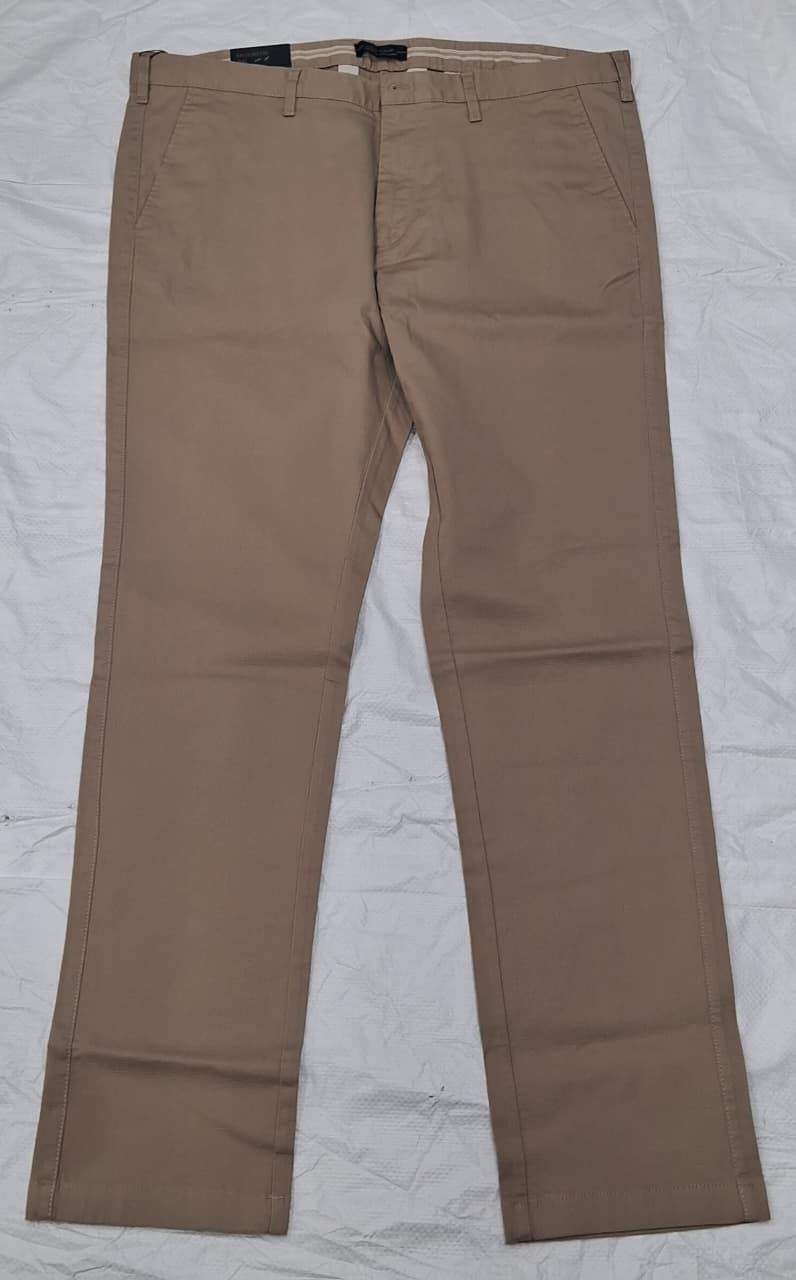
Why the shoe changes the trouser
The same pair of formal trousers can look boardroom-ready with polished black oxfords and relaxed with suede loafers. Shoes set the register of an outfit more strongly than almost any other piece, because they sit at the end of the longest unbroken line your body makes: the leg.
Coordinating formal trousers with shoes therefore comes down to three questions. Do the colours sit comfortably together? Are the trouser and shoe at the same level of formality? And does the hem meet the shoe cleanly? Answer those and you rarely go wrong.
Colour pairings that work
There is no single rule, but a useful principle is that the shoe should usually be darker than the trouser, or at least no lighter. A dark shoe anchors the outfit; a pale shoe under a dark trouser tends to pull the eye downward.
Navy trousers
Navy is the most generous partner. Black shoes give a crisp, formal result. Dark brown or burgundy feels warmer and slightly more relaxed. Tan works on lighter days, though it is better suited to smart-casual settings than strict business formal.
Charcoal and mid grey
Charcoal looks sharpest with black or very dark brown. Mid and light grey are more flexible: black, dark brown, burgundy and even mid-brown suede can all work, depending on the occasion.
Black trousers
Black trousers are best with black shoes. Brown shoes under black cloth can look disconnected, because the two warm and cool darks compete. If you want to explore black further, read How to Style Black Formal Trousers.
Brown, tan, stone and olive
Earth-toned trousers like the one shown above are naturally at home with brown leather — dark brown for contrast, or a mid-brown or burgundy for a tonal look. Black shoes can work with olive and darker browns, but often feel severe against light sand or stone.
A darker shoe anchors the leg; a lighter shoe asks the eye to look down.
Matching formality
Think of shoes as sitting on a ladder from most to least formal. The trouser and shoe should stand on neighbouring rungs.
- Oxfords (closed lacing) — the most formal day shoe. Ideal with suit trousers and dark business formal trousers.
- Derbies (open lacing) — slightly more relaxed and comfortable for wider feet; suit most office trousers.
- Monk straps — sit between oxford and derby in formality and add a little character.
- Leather loafers — smart but easier-going; excellent with slim formal trousers in warm weather.
- Suede shoes and chelsea boots — textured and softer; best with flannel, cotton or earth-toned trousers.
- Minimal leather sneakers — only for relaxed or creative workplaces, and only with trousers that are already tapered and clean-lined.
A sleek, glossy oxford under a soft cotton trouser can look as mismatched as a chunky sneaker under a sharp worsted. When in doubt, match the finish: smooth cloth with smooth leather, textured cloth with textured leather.
Leather soles and slim profiles suit narrow trouser openings; chunkier soles look better under a slightly wider leg. If the hem looks like it is swallowing the shoe or perching on top of it, the proportions are fighting each other.
Weather and setting
Climate matters as much as formality. During heavy rain, polished leather soles can be slippery and suede marks easily, so a rubber-soled derby or a well-sealed leather shoe is a practical choice for the commute — you can always keep a smarter pair at the office. In hot, dry months, loafers and lighter trousers feel natural together, while heavier brushed or flannel trousers look most at home with sturdier lace-ups or boots in cooler weather and air-conditioned interiors.
Where hem meets shoe
The break — the small fold where the trouser rests on the shoe — controls how the two pieces join. A full break hides much of the shoe and suits a classic, wider leg. A slight break or no break shows more of the shoe and suits slim, contemporary cuts and loafers.
Always have trousers hemmed while wearing the shoes you will most often pair them with. A loafer, with its lower vamp, shows more sock and ankle than a lace-up; a heel adds height that changes how the hem falls. Our article on trouser length and break explains each option in detail.
Leg opening and shoe shape
As a rough guide, the trouser opening should cover most of the shoe's top line when you stand. A very narrow opening over a broad shoe can make the feet look oversized; a very wide opening over a sleek shoe can make them disappear.
Belts and socks: the connectors
Belts and socks quietly tie trouser and shoe together.
- Belts should match the shoe in colour and roughly in finish — a polished black belt with polished black shoes, a brown suede belt with brown suede shoes.
- Socks are most discreet when they match the trouser, which extends the line of the leg into the shoe. Matching the shoe also works. Avoid pale or athletic socks with dark formal wear.
- Hardware — buckles and monk-strap fittings look tidiest when they share a tone, silver with silver, brass with brass.
A quick pairing checklist
- The shoe is the same depth as the trouser or darker.
- Trouser and shoe sit on neighbouring rungs of formality.
- Smooth cloth meets smooth leather; textured cloth meets suede or grain.
- The hem was set with these shoes on, and the break looks intentional.
- Belt matches shoe; sock matches trouser or shoe.
- The shoes are clean and polished — even the best pairing fails on scuffed leather.
For outfit ideas that include shirts as well, see Navy Trousers and Shirt Combinations or the full Styling Index. If you would like help pairing a trouser with your existing shoes, get in touch with Options Mall.